[TOC] Chapter 1: Introduction to Physically Based Rendering (PBR)
The Magic of PBR
Imagine walking through a game world where sunlight glints off a polished car hood, or moonlight diffuses softly across a weathered stone wall each material responding to light exactly as it would in real life. This level of realism is achieved through Physically Based Rendering (PBR), a technique in computer graphics that mimics how light interacts with surfaces based on real-world physics. Using accurate material properties like metallicity, roughness, and surface textures, PBR ensures that objects appear consistently realistic under any lighting conditions, from bright sunlight to dim indoor scenes. This approach has revolutionized visual fidelity in games, films, and simulations, making virtual environments feel more immersive than ever.
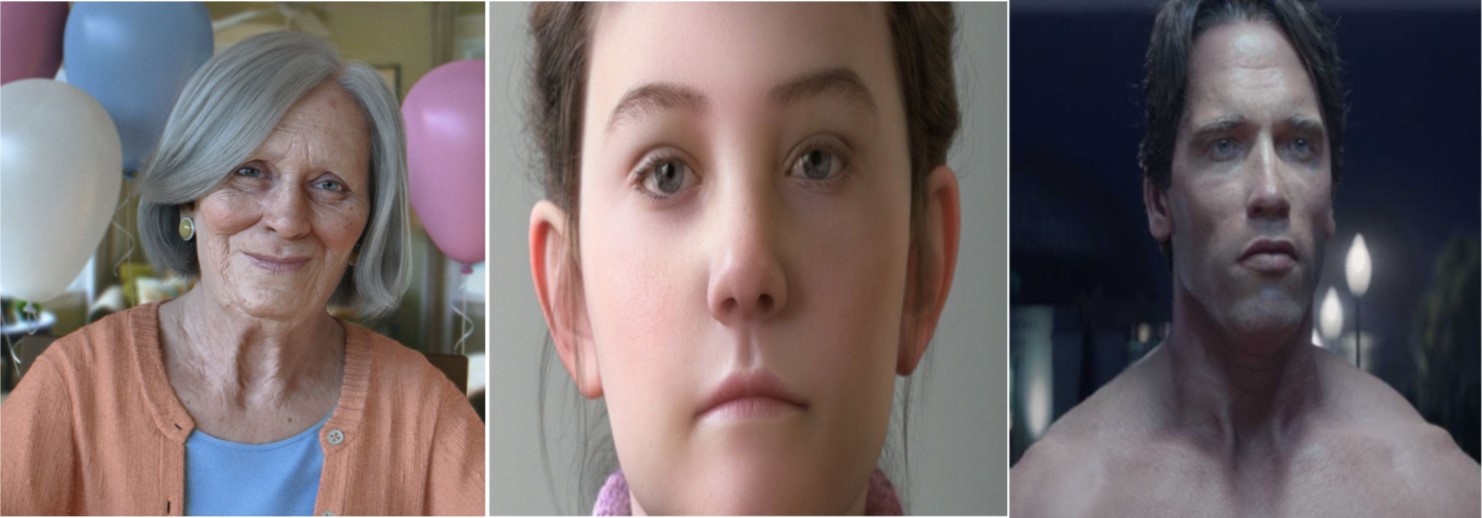
Computer graphics has made jumps in realism, especially in the area of realistic characters.
Photorealistic Rendering and Ray-Tracing Algorithms
Photorealistic rendering and ray-tracing algorithms are rooted in their shared goal of accurately simulating how light behaves in the real world to achieve true-to-life visuals. Photorealistic rendering aims to make digital images appear indistinguishable from photographs by mimicking the subtle nuances of light, shadow, and material interaction. Ray tracing, in turn, is one of the most effective methods for realizing this vision. It excels at capturing complex light interactions such as reflections, refractions, and shadows that are essential for photorealism. While other rendering techniques, like rasterization, can produce realistic images, ray tracing's ability to track the precise behavior of light through a scene allows it to generate much more accurate lighting effects, making it a key tool in creating photorealistic renders.
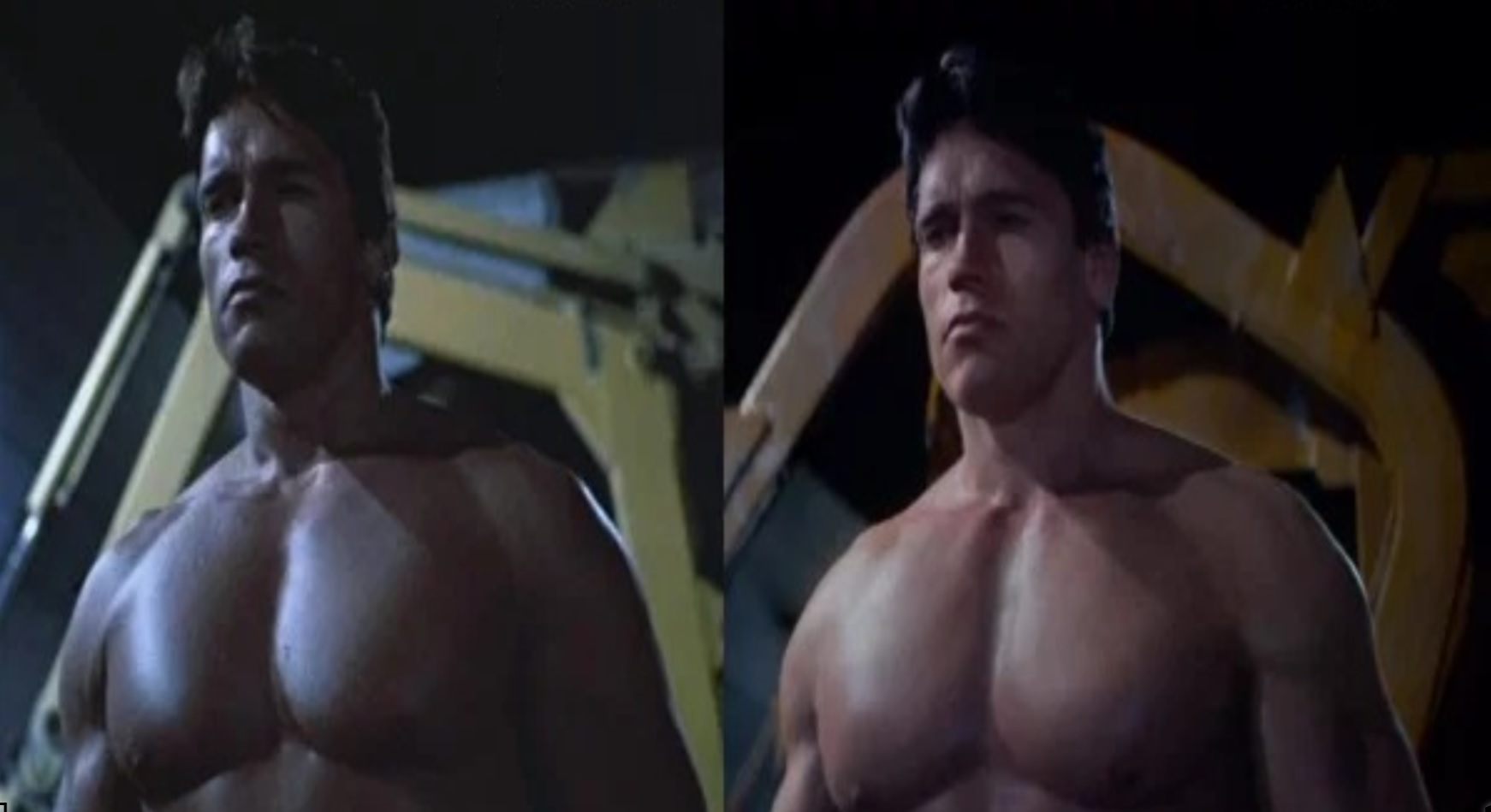
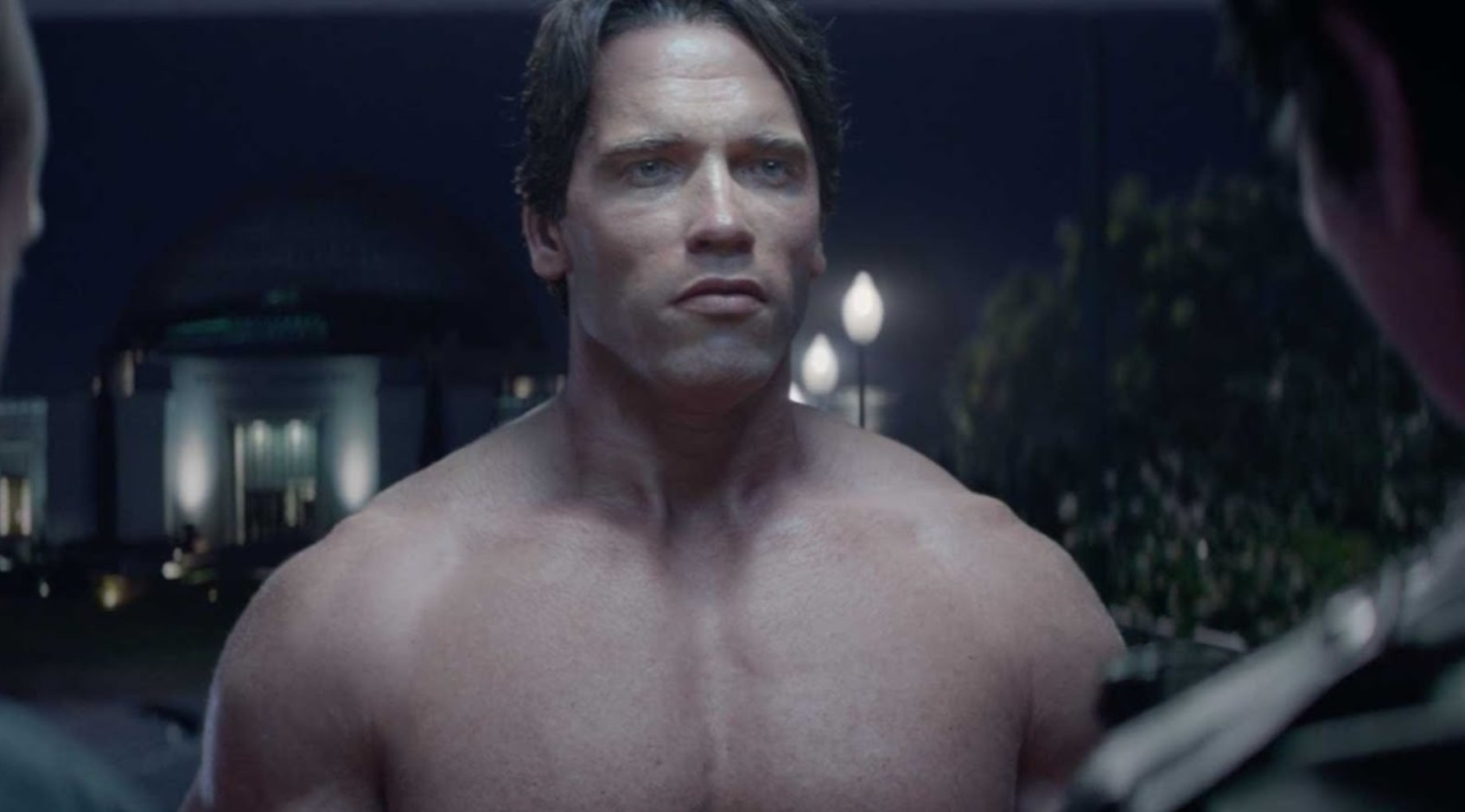
Real or fake? Take a look at the two images side by side and see if you can make out the original Arnie vs the CGI version.
At the heart of the ray-tracing algorithm is the simulation of how rays of light travel from a light source, bounce off surfaces, and ultimately reach the camera, just like how light behaves in the real world. This approach allows ray tracing to replicate how light reflects off shiny objects, diffuses through translucent materials like skin or glass, and casts realistic shadows.
These details are essential for photorealism because they define how we perceive depth, texture, and material qualities in the real world. For instance, when light hits a glossy car hood, it produces sharp reflections, while a rougher surface like wood scatters the light, producing softer, more diffused reflections. Ray tracing can simulate these differences precisely, ensuring that surfaces in a rendered scene respond to light just as they would in reality.
The primary challenge, however, lies in the computational intensity of ray tracing, which has traditionally made it impractical for real-time applications like video games. Each ray must calculate multiple potential light interactions such as bounces between surfaces or through transparent objects which can multiply the number of calculations exponentially in complex scenes. This is why ray tracing was historically used for non-interactive media, such as films or high-end visual effects, where rendering time is less of a constraint.
However, with advancements in hardware and software, particularly the development of GPUs capable of real-time ray tracing, we are seeing this algorithm applied more widely in interactive media. This evolution has bridged the gap between the ultimate goal of photorealistic rendering and the real-time demands of industries like gaming, bringing the highest level of visual fidelity closer to real-time applications.
While inaimate objects are less problematic, when it comes to 'living' tissue - does the graphical solution capture the 'soul'?
History of Physically Based Rendering (Journey From Then To Now)
When did it start and where are we now!
Computer graphics has evolving significantly over the last few decades as computational power increased and as artists and scientists sought to replicate the complexities of real-world materials and lighting.
The foundations of PBR can be traced back to the early computer graphics techniques of the 1970s and 1980s, when researchers began exploring methods to simulate the interaction of light with surfaces. Notable advancements during this time included the development of basic reflection models, such as the Phong reflection model introduced by Bui Tuong Phong in 1975, which provided a way to simulate specular highlights and surface shininess.
The 1990s marked a turning point for PBR as researchers like Robert Cook and Kenneth Torrance introduced the Cook-Torrance reflection model in 1982, which provided a more accurate representation of how light interacts with surfaces, including the concepts of microfacet theory. This model paved the way for the integration of more complex physical properties, allowing for more realistic rendering of materials. By the late 1990s and early 2000s, advancements in computer hardware, alongside the growing field of game design and visual effects, led to the widespread adoption of PBR techniques in commercial applications. The introduction of new rendering engines that employed these principles enabled artists to create high-quality graphics in real-time, setting the stage for contemporary graphics engines used in modern games and simulations.
The push for physically accurate rendering continued into the 21st century with the introduction of real-time PBR workflows in game engines like Unreal Engine and Unity. These engines incorporated principles of PBR to provide artists with intuitive tools for creating realistic materials using parameters like albedo, metallicity, roughness, and normal maps. The standardization of PBR workflows through initiatives like Disney's PBR model and the PBR specification for glTF (GL Transmission Format) further solidified its place in both gaming and film industries, allowing for greater interoperability and consistency across various platforms.
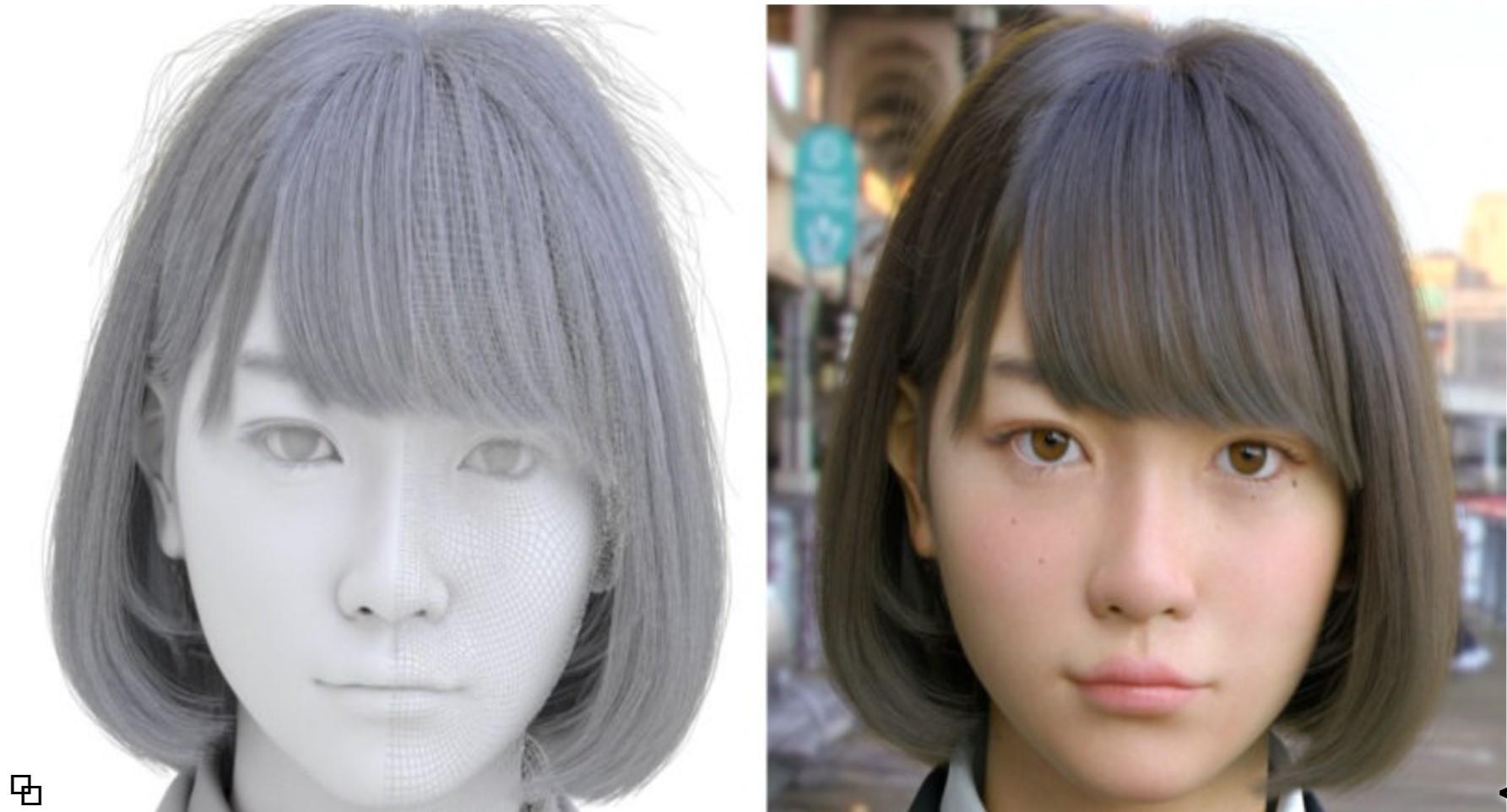
A major problem in the past was the level of detail - however, today, every single hair, every single bump on the skin, even the sub-surface scattering properties - can all be stored for a graphical model.
Important Milestones
These milestones mark key developments in the field of physically based rendering, showcasing the evolution from basic reflection models to sophisticated real-time rendering techniques that have transformed computer graphics across industries.
• 1975: Bui Tuong Phong introduces the Phong reflection model, allowing for basic specular reflection in computer graphics.
• 1982: Robert Cook and Kenneth Torrance develop the Cook-Torrance reflection model, which incorporates microfacet theory for more accurate light interaction with surfaces.
• 1996: The Blinn-Phong shading model is introduced by James Blinn, which simplifies the Phong model and improves rendering efficiency.
• 2001: The NVIDIA Gelato renderer is released, providing support for PBR techniques in a production environment for visual effects.
• 2007: The release of Shader Model 4.0 by Microsoft, which enhances the capability of graphics hardware to perform advanced PBR techniques.
• 2012: The Disney PBR model is published, introducing a robust framework for physically accurate shading, including workflows for artists.
• 2015: The introduction of OpenGL 4.5 includes support for advanced rendering techniques, further pushing PBR into the mainstream.
• 2016: The release of glTF 2.0, which standardizes PBR workflows for web applications and 3D models, promoting interoperability between platforms.
• 2017: Unreal Engine 4 adopts the PBR workflow, allowing developers to create realistic materials and lighting in real-time applications.
• 2020: The introduction of ray tracing capabilities in real-time rendering engines, such as in Unreal Engine and Unity, significantly enhances PBR accuracy by simulating light paths in a physically accurate manner.
It's really incredible to how far we've come in computer graphics in such a short time! If you look at the amazing advancements and the speed at which we're progressing it boggles the mind! Watch the movie Tron released in 1980 compared to a more recent blockbuster like Avatar in 2009.
Visitor:
Copyright (c) 2002-2026 xbdev.net - All rights reserved.
Designated articles, tutorials and software are the property of their respective owners.